Blog
TestChimp admin blog post 1790318006999
An excerpt written by the TestChimp SmartTest for TS-390.
TestChimp admin blog post 1790231647455
An excerpt written by the TestChimp SmartTest for TS-390.
TestChimp admin blog post 1790231583704
An excerpt written by the TestChimp SmartTest for TS-390.
TestChimp admin blog post 1789551514217
An excerpt written by the TestChimp SmartTest for TS-390.
kkm
SFDFSD
Explore SFDFSD and gain valuable insights through this comprehensive guide.Explore SFDFSD and gain valuable insights through this comprehensive guide.Explore SFDFSD and gain valuable insights through this comprehensive guide.Explore SFDFSD and gain valuable insights through this comprehensive guide.
.png)
W
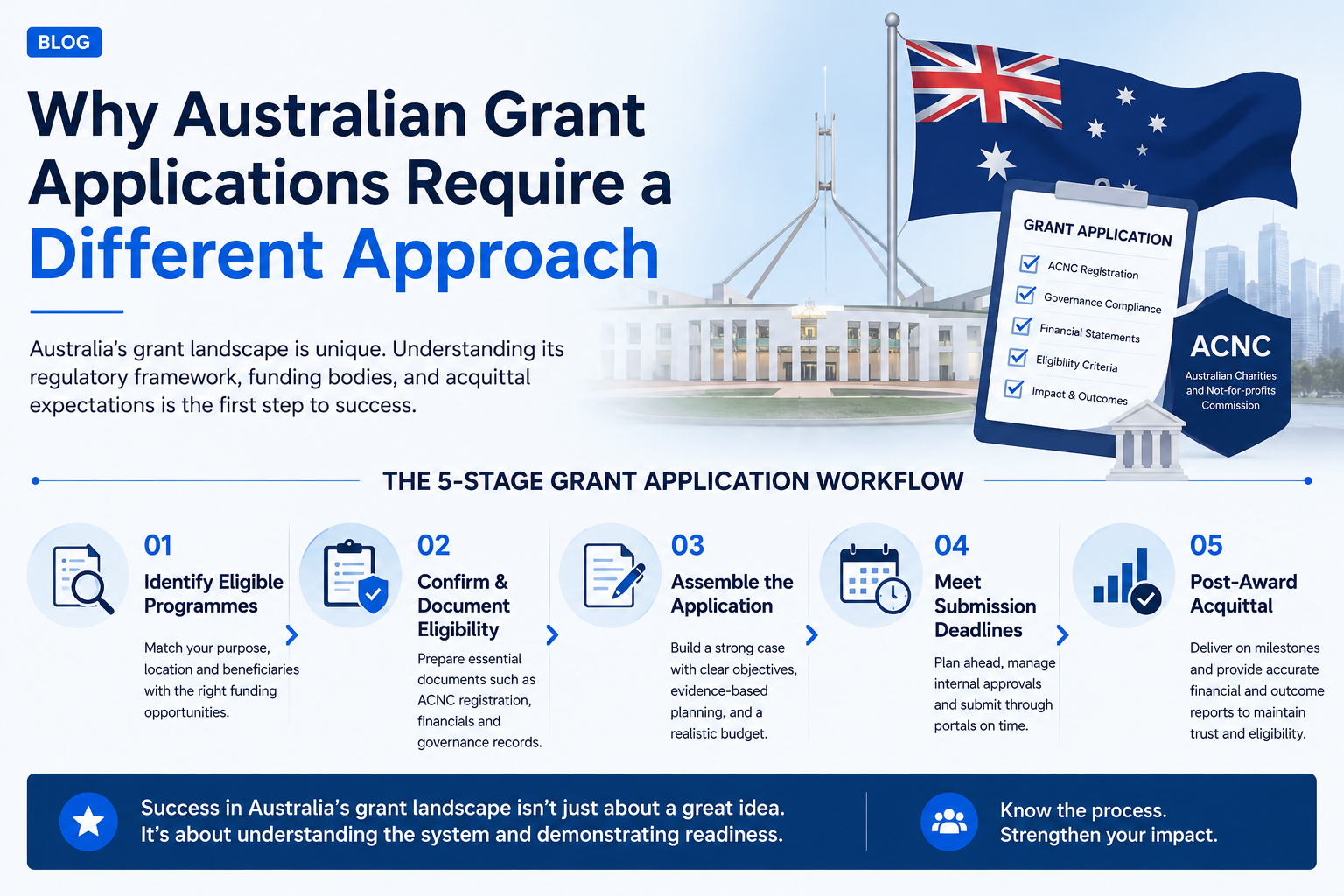
Why Australian Non-profits Lose Grants Before Assessment Begins
Most Australian non-profits lose grant funding at the compliance stage, before assessors even read their applications. Learn the structural mistakes that trigger automatic disqualification and the five non-negotiable steps to write applications that win.
grant strategy
Understanding Expected Outcomes for Successful Grant Proposals
Expected outcomes are critical for grant proposals, providing measurable results that demonstrate the anticipated impact of funded initiatives. This post explores how to articulate these outcomes effectively to secure funding and ensure accountability.
Unlocking Grant Success: The Critical Role of Expected Outcomes
Clearly defined expected outcomes are crucial for successful grant applications. This post explores how articulating these outcomes enhances alignment with funders’ goals and improves your proposal's appeal, ensuring measurable impacts and accountability.
The Importance of Defining Expected Outcomes in Grant Proposals
Defining expected outcomes in grant proposals is crucial for success, as it helps demonstrate accountability and effectiveness to grantmakers. Clear outcomes enhance alignment with funders' goals and support project evaluation, ultimately increasing funding chances for non-profits.
Why Your Project Timeline Section Makes or Breaks Grant Applications
A compelling needs statement gets you noticed, but your project activities and timeline section is what proves you can actually deliver. Funders use this section to assess risk, organisational capacity, and project feasibility — making it a critical differentiator in competitive grant rounds.kkk
Writing Australian Government Grants: Strategy Over Storytelling
Australian government grant applications operate within structured assessment frameworks that reward precision and policy literacy, not narrative persuasion alone. Discover the strategic differences between government and philanthropic funding, and the five essential steps to write competitive…
Why Australian non-profits lose funding through poor budget planning
For Australian non-profits, a strong narrative isn't enough — a poorly constructed budget signals risk and undermines otherwise competitive grant applications. Discover the five essential questions to strengthen your budget before submission.